



Choosing the right foam mattress involves more than comparing its price or firmness. One important factor to understand is foam density, as it can influence how a mattress feels, responds to pressure and performs over time.
High-density and low-density foam mattresses are designed for different comfort preferences and budgets. Understanding their differences can help you make a more informed decision when shopping for a new mattress in Perth.
1. What Is a High-Density Foam Mattress?
A high-density foam mattress is made using foam with more material packed into a given volume. This generally creates a denser structure that can offer better resistance to repeated compression.
Some potential benefits include:
• Durability: High-density foam can retain its structure for longer, depending on its quality and construction.
• Consistent support: It may provide a more stable feel under regular use.
• Pressure distribution: Memory foam layers can contour to the body and distribute pressure.
• Reduced wear: Quality high-density foam may be less likely to develop impressions quickly.
However, density does not automatically determine firmness. A high-density foam mattress can still have a soft, medium or firm feel depending on its formulation and comfort layers.
2. What Is a Low-Density Foam Mattress?
Low-density foam contains less material per unit of volume. It is generally lighter and may be used in more affordable mattress designs or as part of a comfort layer.
Some common characteristics include:
• Lightweight construction: Easier to move and handle.
• Affordable options: Often used in mattresses designed for lower budgets.
• Softer initial feel: Certain low-density foams can feel softer when first used.
• Potentially faster wear: Depending on foam quality and usage, it may lose its shape or cushioning more quickly.
Low-density foam is not necessarily a poor choice. Its performance depends on the materials, manufacturing quality and how the mattress is constructed.
3. High-Density vs Low-Density Foam Mattress: Key Differences
The main difference is the amount of material used within the foam, but this can influence several aspects of mattress performance.
• Durability: High-density foam generally offers better resistance to repeated compression, while lower-density foam may wear faster depending on its quality.
• Weight: High-density foam is usually heavier, whereas low-density foam is generally lighter.
• Comfort: Neither density guarantees a particular firmness level. The overall feel depends on the foam formulation and mattress layers.
• Price: High-density foam may cost more because of its material composition, although prices also depend on the brand, design and additional features.
• Support: Density can contribute to how foam responds to pressure, but the mattress's complete construction determines its overall support.
4. Which Foam Mattress Should You Choose?
The right option depends on your sleeping preferences, budget and expected usage.
If you want a mattress for everyday use, consider the quality of the foam, its density specifications and the overall construction. A well-made high-density foam mattress may be worth considering if durability is a priority.
If affordability and lighter construction are more important, a low-density option may suit your requirements. However, check the product specifications and available warranty before purchasing.
If you are comparing different materials and comfort features, explore Memory foam mattresses Perth to see available foam mattress options from Bedworld.
5. Other Factors to Consider Before Buying
Foam density is only one part of choosing a suitable mattress. Before making your decision, consider these factors:
• Sleeping position: Side, back and stomach sleepers may prefer different comfort levels.
• Firmness: Choose a feel that matches your comfort preference rather than assuming density means firmness.
• Foam quality: Check the manufacturer's specifications and product information.
• Temperature regulation: Look for breathable materials or cooling technologies if you tend to sleep warm.
• Warranty: Review the manufacturer's warranty and its conditions.
• Bed base compatibility: Make sure the mattress is suitable for your existing bed frame or base.
You can also compare different Mattress and Base packages Perth if you are planning to upgrade both your mattress and bed base.
Frequently Asked Questions
1. Is a high-density foam mattress better than a low-density foam mattress?
High-density foam generally offers better resistance to compression and may last longer. However, the best choice depends on the foam quality, mattress construction and your comfort preferences.
2. Does high-density foam mean a firmer mattress?
No. Density and firmness are different measurements. A high-density foam mattress can feel soft, medium or firm depending on its formulation.
3. Do low-density foam mattresses wear out faster?
They may be more susceptible to losing their shape under repeated use, but durability also depends on foam quality, construction and how the mattress is maintained.
4. Is memory foam always high-density?
No. Memory foam is available in different densities and formulations. Always check the manufacturer's specifications rather than assuming all memory foam has the same density.
5. What should I check before buying a foam mattress?
Compare foam density, firmness, mattress construction, temperature-regulating features, warranty conditions and compatibility with your bed base.
Final Thoughts
Understanding the difference between high-density and low-density foam can make mattress shopping easier. High-density foam may offer better resistance to wear, while low-density foam can provide a lighter and potentially more affordable option.
Rather than choosing based on density alone, compare the complete mattress construction, comfort level and product specifications. Taking these factors into account can help you find a mattress that suits your needs and budget.
What Is the Difference Between High-Density Mattress and Low-Density Foam Mattress?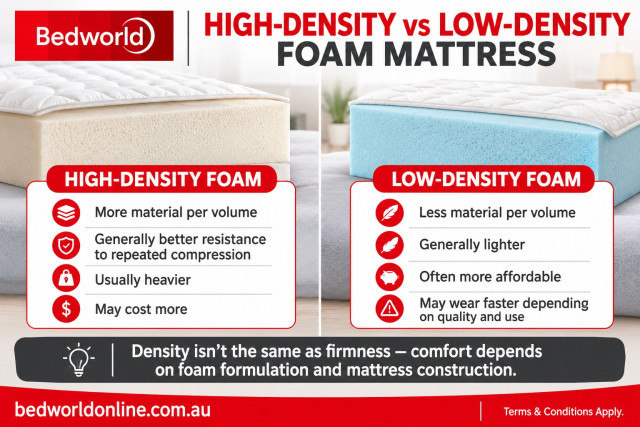 
Visit my Business Website
Welcome Visitor 1
To distribute this article more widely To manage this article or write your own article simply LOGIN
| ||||||
