



Choosing the right mattress is important for comfortable and restful sleep. However, many people still make mattress-buying decisions based on outdated information and common misconceptions. From believing that a firm mattress is always better to assuming that expensive mattresses offer the best comfort, these myths can make the buying process confusing.
Understanding the facts behind these misconceptions can help you make a better decision. Here are seven common mattress myths that are worth reconsidering before purchasing your next mattress.
1. A Firm Mattress Is Always Better for Your Back
Many people believe that a firm mattress is the best option for back support. However, mattress firmness depends on individual comfort preferences, sleeping position, and body weight.
A mattress that is too firm may create pressure around the shoulders and hips, while an overly soft mattress may not provide sufficient support. The ideal choice should offer a comfortable balance between support and pressure relief.
2. Expensive Mattresses Are Always Better
A higher price does not automatically mean better comfort or quality. Mattress prices can vary depending on materials, construction, brand, technology, and additional features.
Instead of choosing a mattress based only on its price, compare its specifications, comfort level, durability, and warranty conditions. The best mattress is one that meets your sleeping requirements and budget.
3. All Memory Foam Mattresses Feel the Same
Another common misconception is that all memory foam mattresses provide an identical sleeping experience. In reality, they can differ in foam density, construction, responsiveness, and comfort layers.
Some memory foam mattresses focus on body contouring and pressure relief, while others combine different materials to provide additional support. Understanding these differences can help you find a suitable option.
4. You Should Replace Your Mattress Every Five Years
There is no fixed replacement schedule that applies to every mattress. Its lifespan depends on material quality, usage, maintenance, and overall condition.
If your mattress develops visible sagging, loses its support, or becomes uncomfortable over time, it may be worth considering a replacement. Regularly checking its condition is more useful than following a specific number of years.
5. Mattresses Do Not Need Regular Maintenance
Many people assume that mattresses require no maintenance after purchase. However, proper care can help maintain their condition and cleanliness.
Using a suitable mattress protector, following cleaning instructions, and rotating the mattress when recommended by the manufacturer can help maintain its condition. Always check the care guidelines for your specific mattress type.
6. One Mattress Is Suitable for Every Sleeping Position
Different sleeping positions can create different comfort and support requirements. Side sleepers may prefer additional cushioning around the shoulders and hips, while back sleepers often look for balanced support. Stomach sleepers may prefer a firmer feel.
When exploring Mattress Options Perth, consider your sleeping position, preferred firmness, and comfort requirements rather than choosing a mattress simply because it is popular.
7. The Bed Base Does Not Affect Mattress Performance
A mattress and its base work together to provide a supportive sleeping surface. An unsuitable or poorly supported base may affect mattress performance and, in some cases, warranty eligibility.
Before purchasing, check the manufacturer's base requirements. Exploring Mattress and Base Packages Perth can also help you compare options for a complete bed setup.
Frequently Asked Questions
1. Is a firm mattress always better for back support?
No. The ideal firmness depends on your sleeping position, body weight, and personal comfort preferences.
2. How often should you replace a mattress?
There is no universal replacement schedule. Consider replacing it when you notice sagging, reduced support, or persistent discomfort.
3. Are expensive mattresses always worth buying?
Not necessarily. Compare mattress materials, construction, comfort, and warranty conditions before deciding.
4. Does a bed base affect mattress comfort?
Yes. A suitable base provides the required support and helps the mattress perform as intended.
Final Thoughts
Believing common mattress myths can lead to an unsuitable buying decision. Understanding mattress firmness, materials, maintenance, and bed base compatibility makes it easier to compare available options. Rather than following general assumptions, focus on your individual comfort requirements and choose a mattress that supports your everyday sleep needs.
7 Mattress Myths Most People Still Believe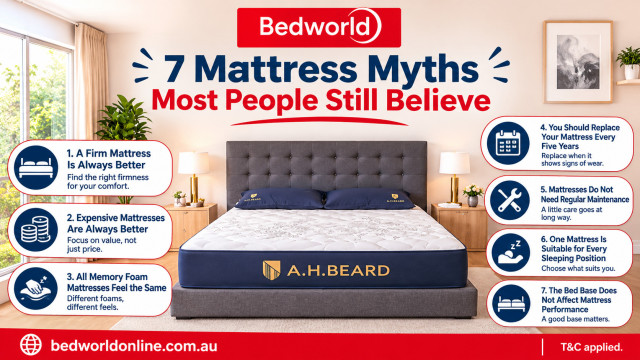 
Visit my Business Website
Welcome Visitor 2
To distribute this article more widely To manage this article or write your own article simply LOGIN
| ||||||
